

Learn how to wash fermented coffee correctly to preserve its sensory attributes. Discover best practices for washing and why technology is key to traceability and sustainability at the processing plant.
The challenge of speciality coffee
Nowadays, fermentation has become coffee farmers’ favourite tool for bringing out unique flavour profiles. However, there is one critical step that is often underestimated: washing.
Poor washing of coffee that has undergone prolonged fermentation can ruin months of work, leaving residual flavours or, worse still, compromising the consistency demanded by international buyers. How can we ensure that all that effort put into fermentation translates into a clean, winning cup?
Why is washing so important for fermented coffees?
Fermented coffee develops a higher density of degraded mucilage, which must be removed with precision. The aim of washing is not simply to ‘remove the mucilage’; it is to ensure the stability of the bean for the drying process.
1. Sensory cleanliness (Clean cup)
Washing removes traces of sugars and yeasts which, if left on the bean during drying, could lead to over-fermentation, vinegary flavours or mouldy notes.
2. Consistency and traceability
For an exporter, consistency is critical. If a batch is not washed properly, drying will be uneven, affecting the physical appearance of the bean and its behaviour during roasting.
How much water is needed to wash coffee?
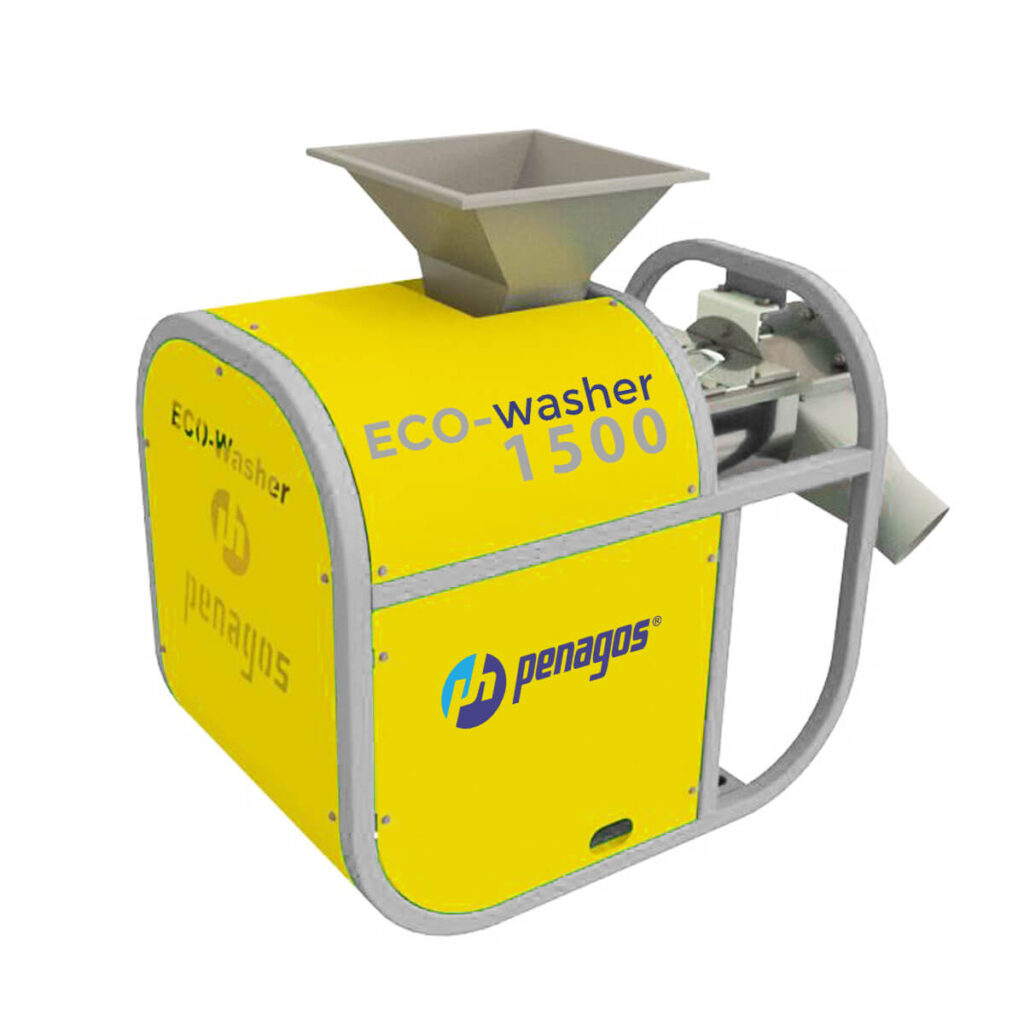
Traditionally, large quantities of water were used in flushing channels. However, with modern technologies such as Penagos’ Ecowasher, water consumption is drastically reduced, using only as much as is necessary to remove the mucilage without polluting water sources.
View more: https://youtu.be/H_NtvTMvhYo?si=ra-OFXOF6xM_ePqp
Does mechanical washing damage the coffee embryo?
No, if the correct equipment is used. Upflow washers are designed to handle the beans gently, preventing any impact that might crack them or affect their germination and final quality.
Is it possible to wash coffee without using water (dry washing)?
Rather than ‘dry processing’, we are talking about eco-friendly washing. Sophisticated equipment allows the fermented mucilage to be removed with minimal mechanical friction and almost no water consumption, which translates into greater sustainability for the estate.
Technology at the service of coffee farmers: Penagos’ Ecowasher
At Penagos, we understand that the future of coffee lies in efficiency. That is why our Ecowasher fermented coffee washers have been designed around three fundamental pillars:
- More Technology: Flow systems that adapt to the density of the beans and the level of fermentation.
- Greater Traceability: By standardising the washing process, we ensure that every batch leaving your processing plant is of the same quality.
- Greater Consistency: It prevents human error and downtime in manual washing lines.
“The future of coffee processing is already here, and it is a process in which technology ensures that the flavour of the soil reaches the end consumer intact.”


Washing properly is an investment in the future
Washing is not the end of the process; it is the bridge to successful drying. Learning about best practices and having equipment that preserves the integrity of the bean is what sets a traditional coffee farmer apart from a coffee entrepreneur.
Do you want to secure a sustainable future for your business? Explore our range of equipment and discover why the world’s finest coffee producers rely on Penagos’ engineering to process their success.